
The Psychology Behind Strong Brand Identity
News — May 19, 2026This article opens with a quick story about a red coffee cup to show how brand identity works on the mind without saying a word. It explains why identity goes far beyond a logo and breaks down how colors, fonts, and emotions shape the way customers feel about a business. Readers learn why the brain picks favorites in seconds, how typography carries a silent voice, and why emotional branding is the layer that builds true loyalty. The piece also shows how UX brings identity to life through real touchpoints and what separates strong brands from forgettable ones. It wraps up with how Noircase blends design, psychology, writing, and UX to build identities that stay in people's minds for years.
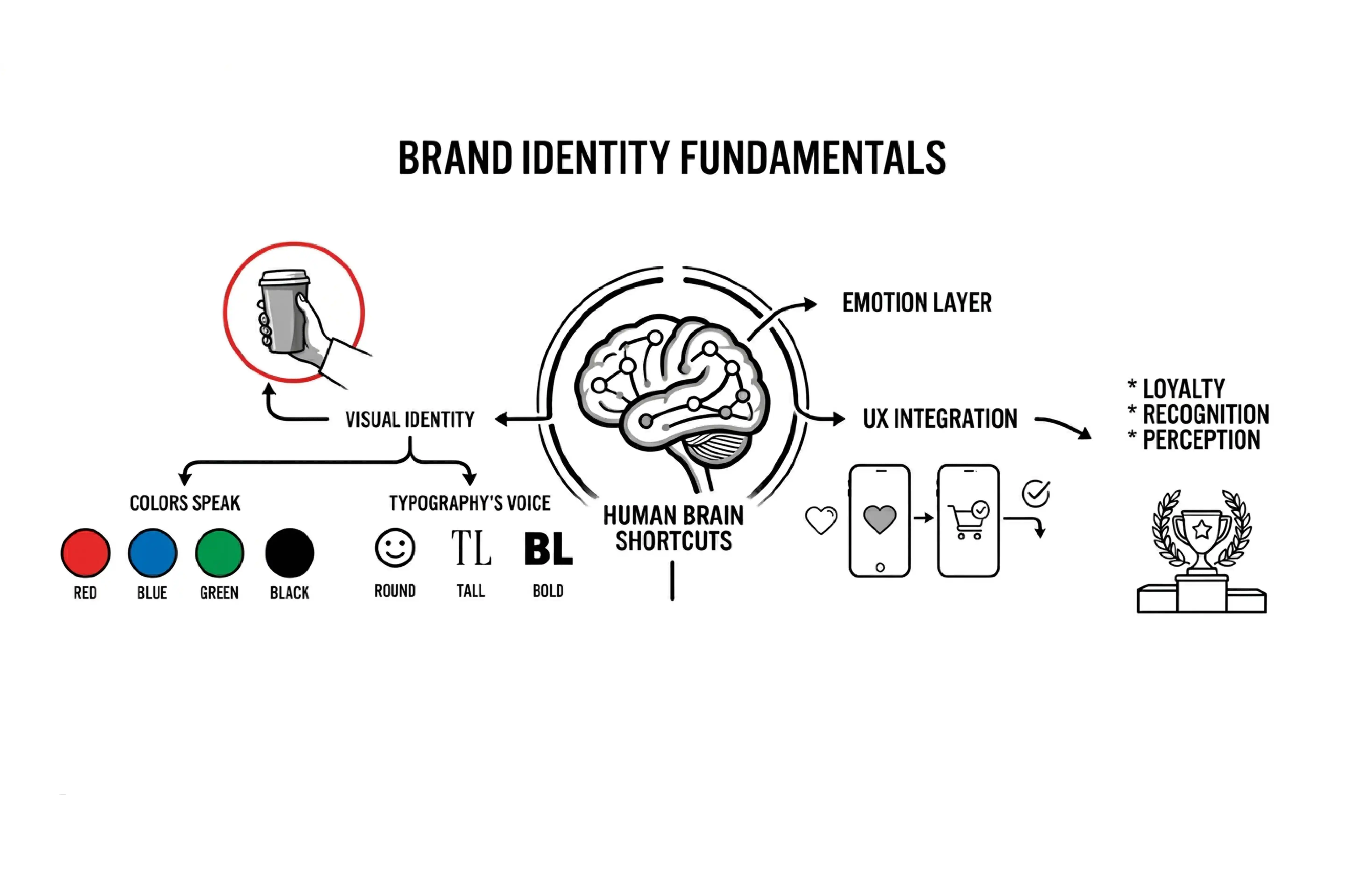
The Red Cup That Stopped Me Mid-Walk
A few winters back, I was rushing down a busy street, late for a meeting, head down, no time to look up. Then I caught a glimpse of a red paper cup in someone's hand. I didn't see a logo. I didn't read a single word. But my brain whispered, "That's coffee from that place." My feet slowed down on their own.
That moment stuck with me. A brand had reached into my head without saying anything. No ad, no jingle, no sales pitch. Just a color and a shape that I'd seen so many times, it had built a quiet home in my mind.
This is the hidden power of brand identity. It works on people before they even know it's working. At Noircase, we spend our days studying these small mind tricks, because they're the real reason some brands stay and others slip away.
What Brand Identity Actually Is
Let's clear something up first. Brand identity is not your logo. It's not your color scheme either. Those are pieces of it, but the full picture is much bigger.
Brand identity is the feeling people carry in their heads when they think of your business. It's the mix of sights, sounds, words, and moods that show up every time someone hears your name. A strong identity makes that feeling clear and steady. A weak one leaves people confused or, worse, forgetful.
Smart brand identity design shapes how customers feel before they even buy. And feelings, as any honest marketer will tell you, drive far more sales than facts ever will.
Why Colors Speak Louder Than Words
Pick any brand you love. Now picture its color. Chances are, you saw the color before you saw the name. That's not by accident.
Colors talk to the part of the brain that skips logic and runs straight to feeling. Red feels bold and hungry. Blue feels calm and safe. Green feels fresh and honest. Black feels sharp and serious. These reactions aren't made up. They're wired into how our minds have worked for thousands of years.
When a brand picks the right color, it doesn't just look pretty. It plants a mood. That mood shows up every time someone scrolls past your post, walks by your shop, or opens your app. Over time, that color becomes the brand in people's minds.
Typography Has a Voice Too
Most people never think about fonts. But fonts are talking to them all day long.
A round, soft font feels friendly, like a neighbor waving hello. A tall, thin font feels fancy, like a quiet luxury store. A bold, blocky font feels loud and strong, like a sports brand shouting from a billboard. Each shape carries a tone, even when nobody reads the words.
This is part of what we call visual identity. It's the silent voice of your brand. When your font matches your message, people trust you faster. When the two clash, something feels off, even if the customer can't explain why.
The Emotion Layer Where Real Loyalty Lives
Colors and fonts grab attention. But emotion is what keeps people coming back.
Think about the brands you defend in conversations. The ones you'd never switch from, even when a cheaper option shows up. That bond didn't come from a clever slogan. It came from a feeling those brands gave you over time. Maybe they made you feel smart. Maybe safe. Maybe seen.
This is emotional branding doing its quiet work. It's the layer most businesses skip because it's harder to measure. But it's also the layer that turns one-time buyers into lifelong fans. People forget what you sold them. They never forget how you made them feel.
How the Brain Picks Favorites
Here's something wild about the human mind. We make most buying choices in seconds, often before we've even read the price. Our brain runs on shortcuts. It looks for things that feel familiar, safe, and easy to understand.
A strong brand identity gives the brain all three at once. Familiar colors. A clear voice. A steady mood. The mind sees these signals and quietly says, "Yes, this one. I know this one." That tiny nod is worth more than any paid ad.
Weak identities do the opposite. They send mixed signals. New colors on every page. Different tones on every post. The mind hesitates, and hesitation kills sales.
Branding Psychology Meets Real Life Through UX
A brand identity that only lives on a poster is half a brand. The other half shows up when someone actually uses your product or visits your site.
If your colors feel warm but your checkout feels cold, the spell breaks. If your ads sound playful but your emails sound like robots wrote them, people get confused. Every touchpoint has to carry the same feeling, or the whole thing falls apart.
This is why we link identity work with UX from day one. The way a button feels to tap, the speed of a page, the tone of an error message — these are all part of your identity, whether you planned them or not. Smart brands plan them on purpose. That's where real branding psychology shows up, not in a textbook, but in the small things customers feel every day.
What Happens When Identity Is Done Right
Strong brand identity does something quiet but powerful. It earns space in people's heads. You stop being just another name on a list. You become the one they think of first.
That kind of memory pays off for years. People recommend you without being asked. They notice your posts faster. They forgive small mistakes because the bigger feeling is good. They pay more because the brand feels worth it.
This is the long game we play with our clients. Not a viral moment. A lasting spot in someone's mind.
How Noircase Builds Identities That Stick
We don't start with mood boards. We start with people. Who are your customers? What do they hope for? What do they fear? What feeling do you want them to walk away with?
Once those answers are clear, the colors, fonts, words, and flows start to make sense. Every choice has a reason. Every piece supports the same mood. The result is an identity that doesn't just look good but works on the human mind the way a great brand should.
We blend design, psychology, writing, and UX into one steady process. No mismatched parts. No guessing. Just a brand that feels right from the first glance to the final click.
Let's Build an Identity People Won't Forget
Your customers are picking favorites every day, often without knowing why. Their minds are choosing the brands that feel clear, warm, and easy to trust. The ones that fade away are the ones that never gave the brain anything to hold onto.
You don't need a bigger budget to be remembered. You need a sharper identity. One that uses color, type, emotion, and experience to leave a steady mark on every person it touches.
That's the kind of work we live for at Noircase. If you're ready to stop blending in and start sticking in people's minds, book a free brand identity call with us today and let's shape a brand that feels like it was always meant to be yours.